With The Reformatory, Régis Gonçalves presented a new chapter in his ongoing research into forgotten histories. The exhibition was developed in response to 750 years of Amsterdam and began with a seemingly simple fact: pau brasil wood from Brazil, processed in the seventeenth-century Rasphuis by prisoners. This wood, known for its deep red dye, was finely rasped there as part of a so-called re-education programme.
The Rasphuis was intended to teach young men labelled as criminals a trade, so that after serving their sentence they could return to society. During his research, however, Régis encountered another group of prisoners whose situation had little to do with rehabilitation. Men suspected of homosexual behaviour, at the time referred to as sodomy, were imprisoned and sometimes held for life. One of them was Jan Wissing, also known as Wisser, who was arrested in 1764 following accusations of masturbation. He ended up in the basement of the Rasphuis, the so-called Secrete Plaats, and died there in 1781.
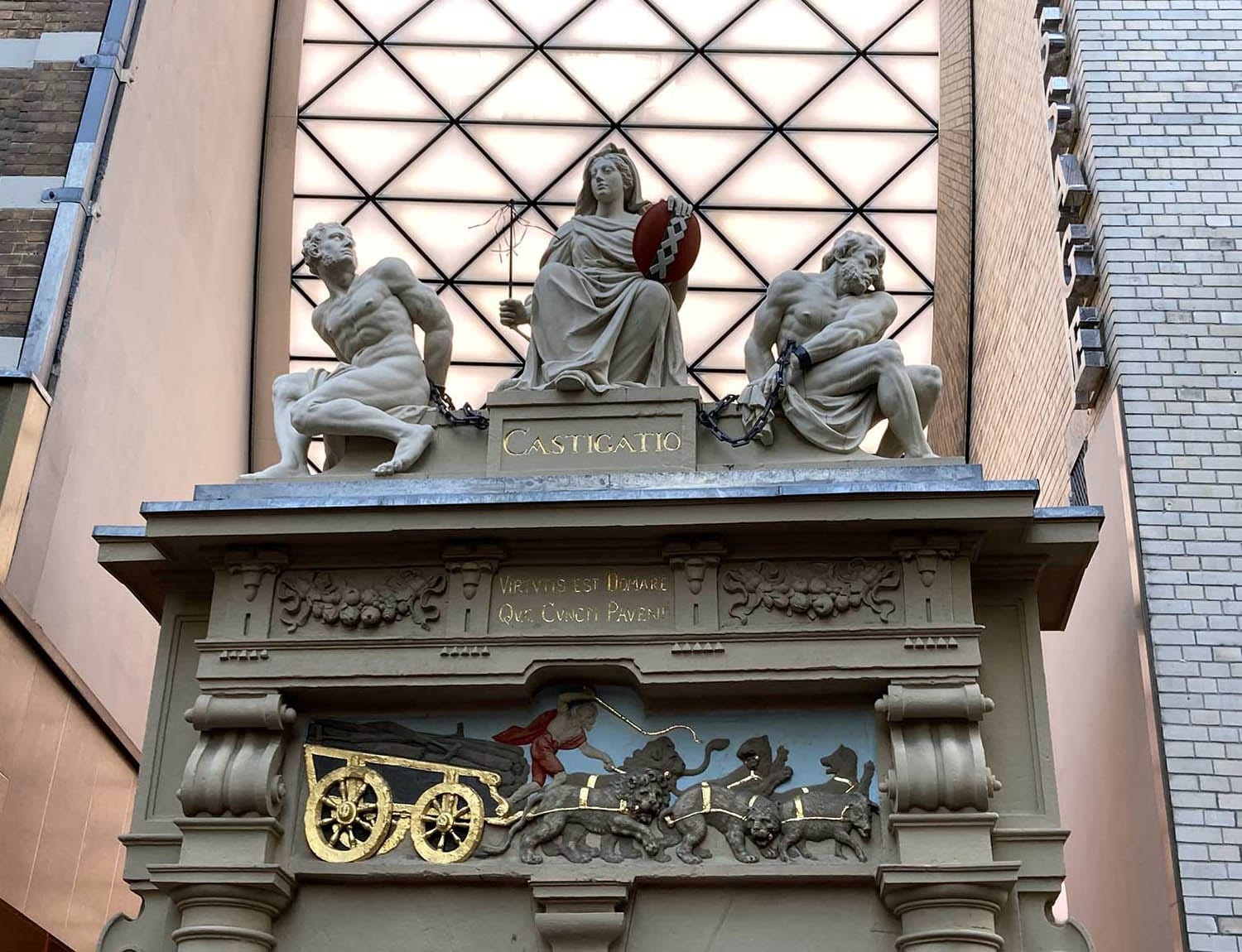
In this basement, separated from the rest of the building, men considered morally dangerous were confined. They were invisible to the public and to the other prisoners. The inscription above the entrance of the Rasphuis, “Wild Beasts Must Be Tamed”, takes on a particularly harsh tone in this context. The exhibition reveals how quickly someone could be labeled unwanted and set apart.
In The Reformatory, history becomes almost tangible. The exhibition feels like a walk through the corridors of the Rasphuis, where the silent system of exclusion and punishment still seems to echo. Régis Gonçalves invites visitors to reflect on how a city defines its norms and who is allowed to belong.