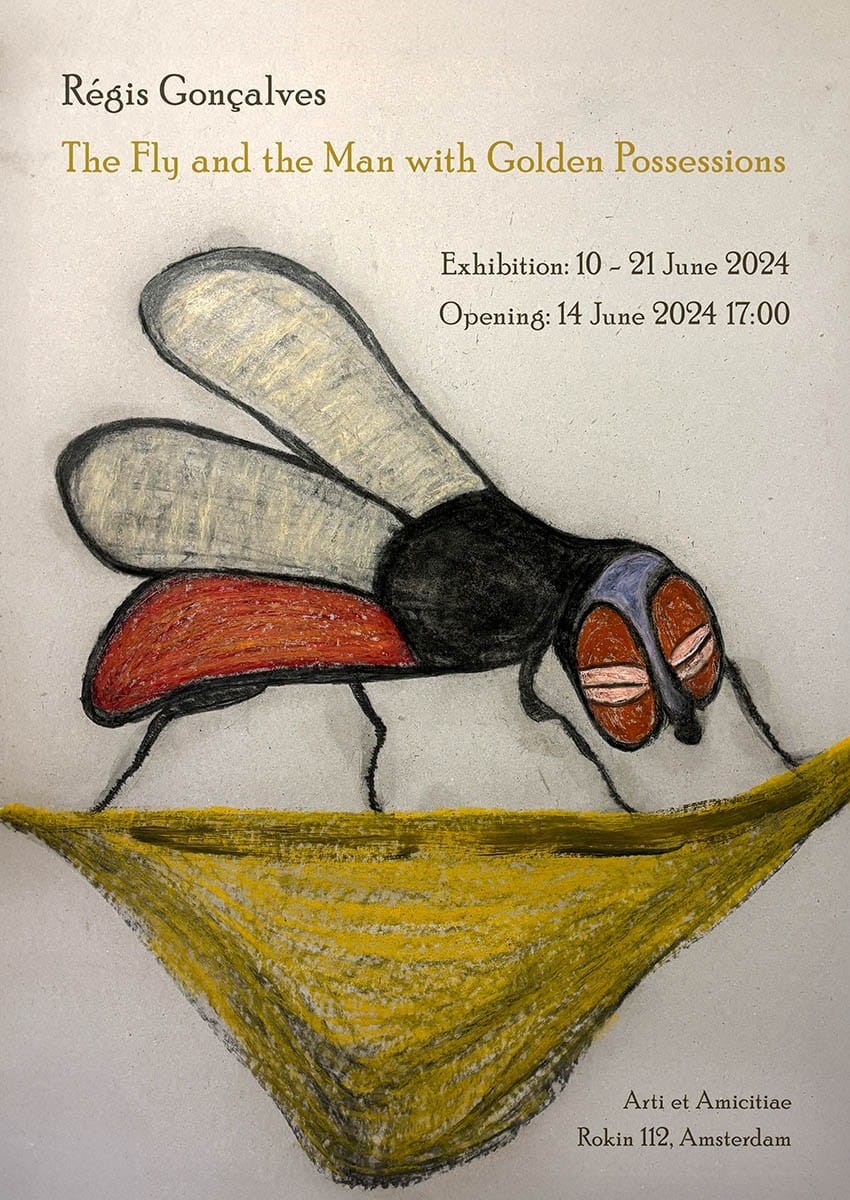
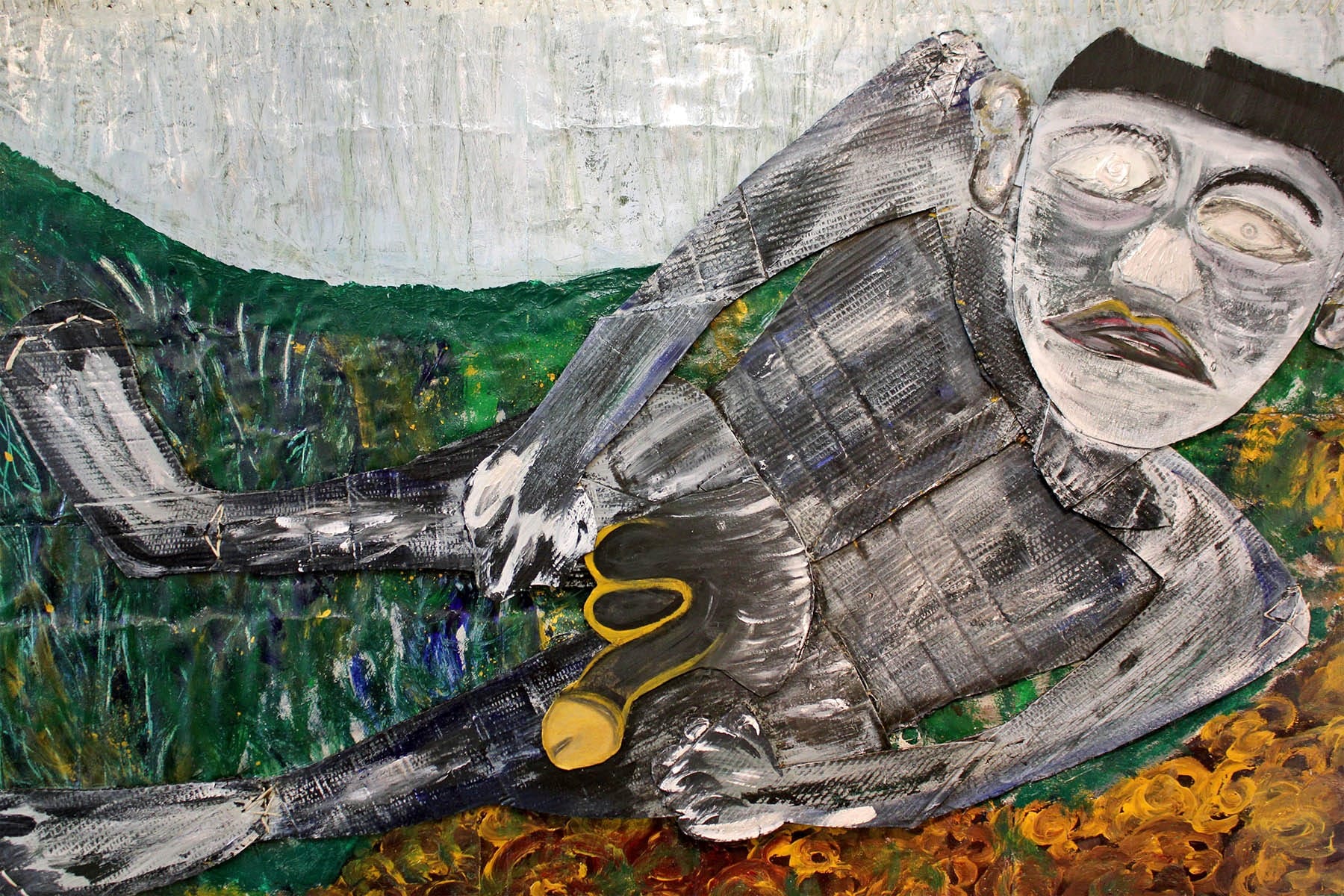
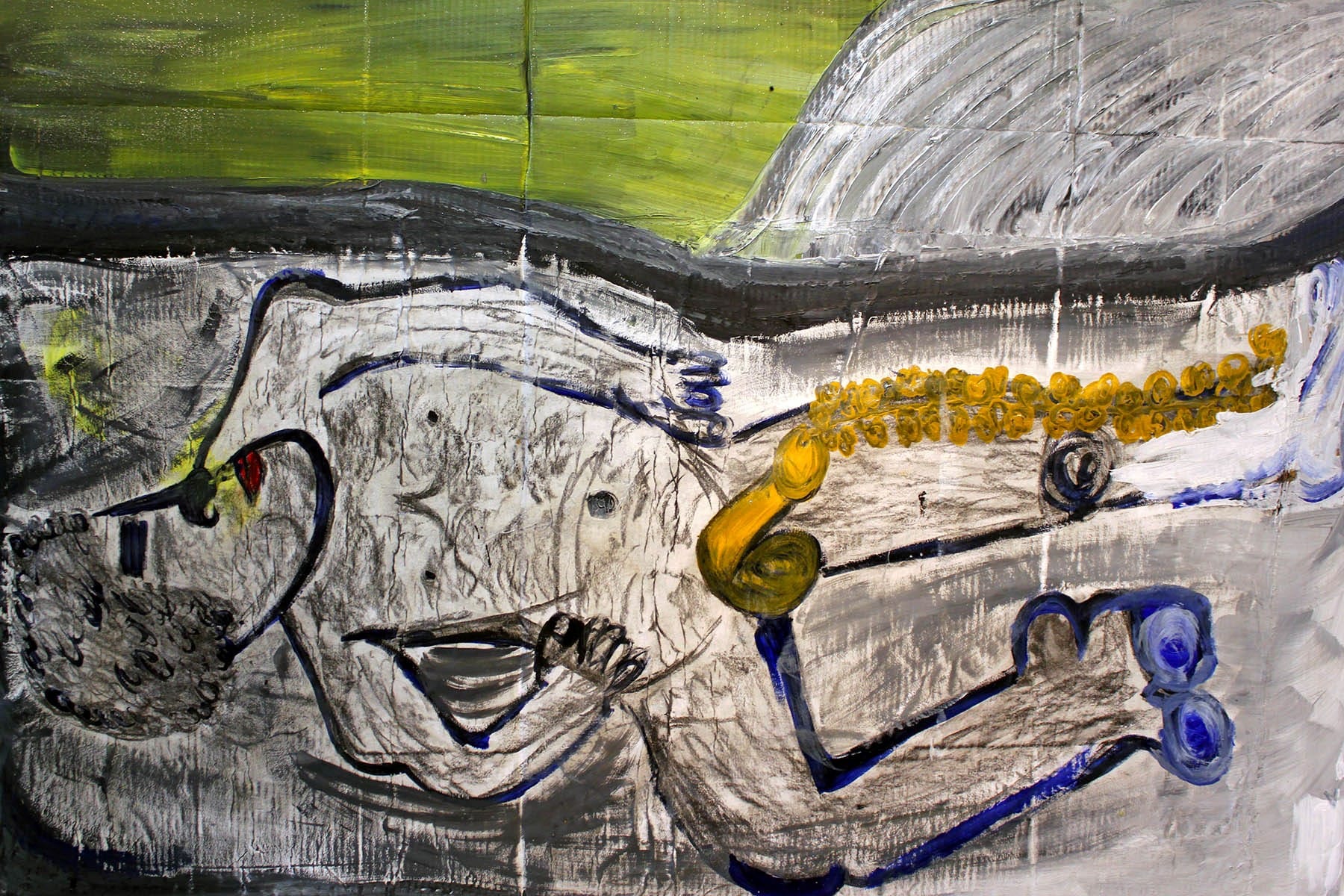
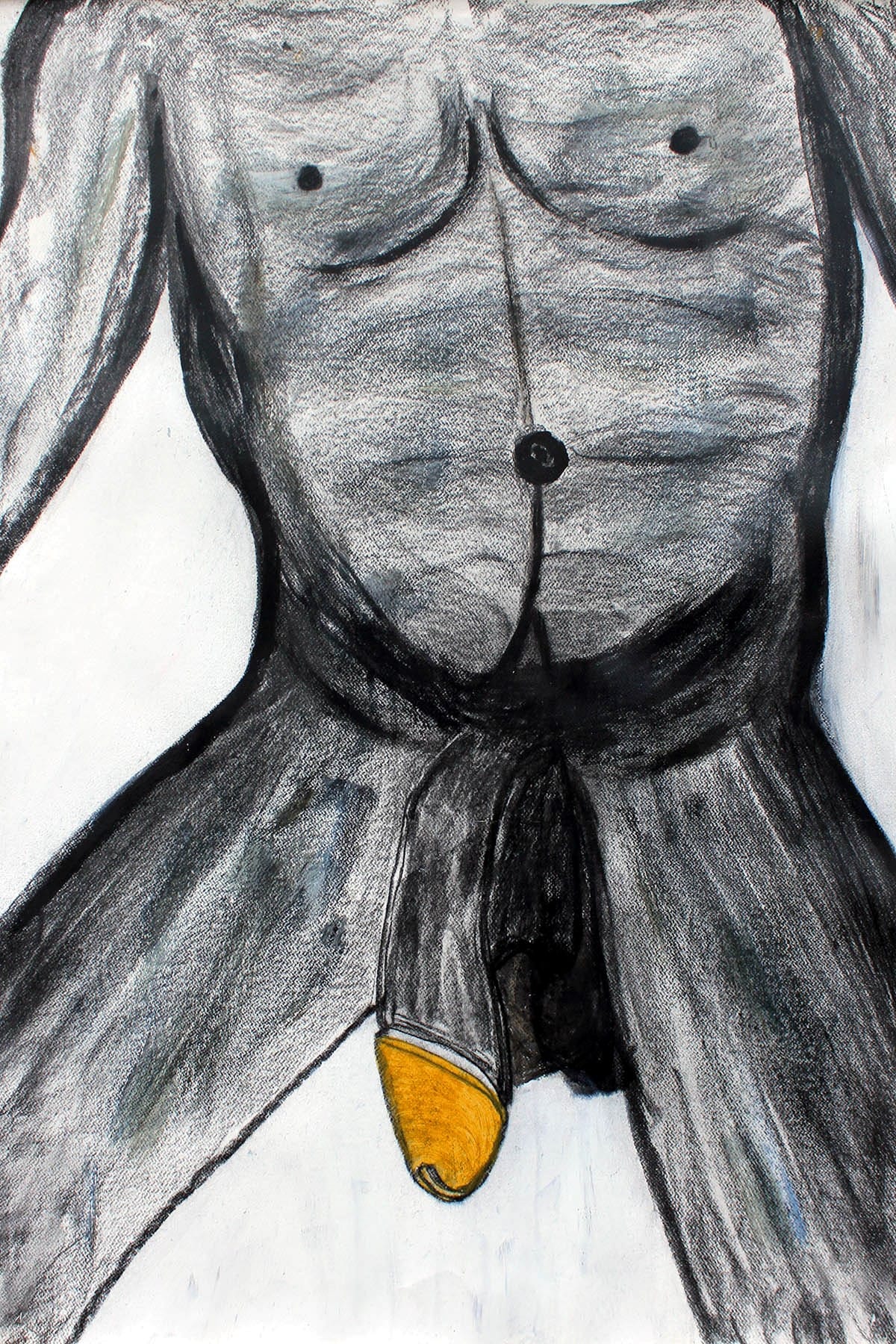
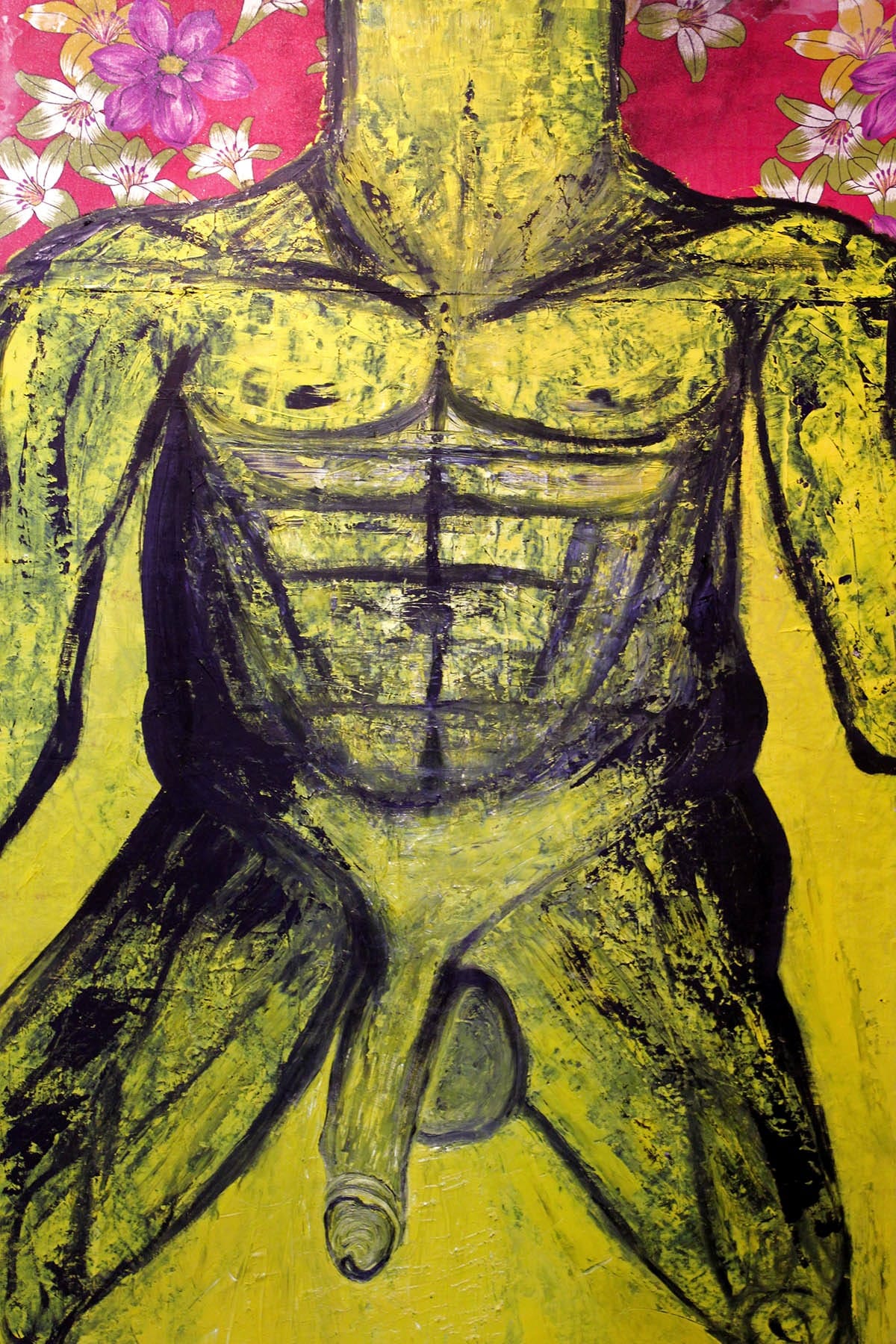
In June 2024, Régis Gonçalves presented the exhibition The Fly and the Man with Golden Possessions at Arti et Amicitiae. In June 2024, Régis Gonçalves presented the exhibition The Fly and the Man with Golden Possessions at Arti et Amicitiae. Born around 1860 in Minas Gerais, Brazil, he is said to have been used as a ‘breeding stallion’ on a plantation, where the owner forced him to impregnate enslaved women. This practice, which continued long after the abolition of slavery in Brazil in 1888, is scarcely documented, yet it survives in orally transmitted family histories.
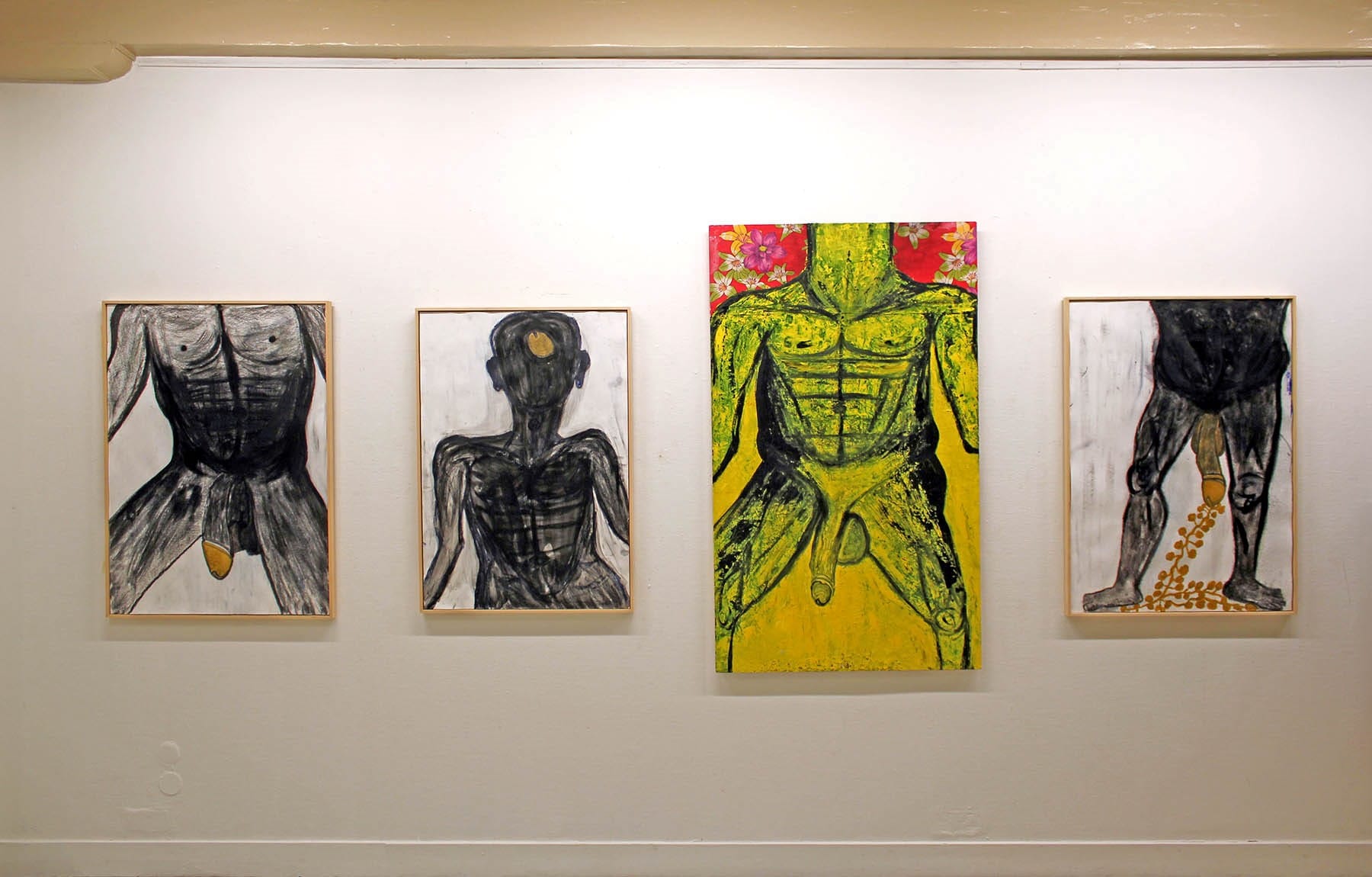
In a series of powerful and unsettling works, Régis shows how the Black man was reduced to an object: to a body part, to a source of strength, to merchandise. The exhibition presents the male figure through the eyes of the plantation owner: animalised, anonymous, yet desired for his ‘golden possessions’. The fly in the title symbolises the exploiter, an insect that feeds on blood, much like the slave owner who enriched himself at the expense of human dignity.
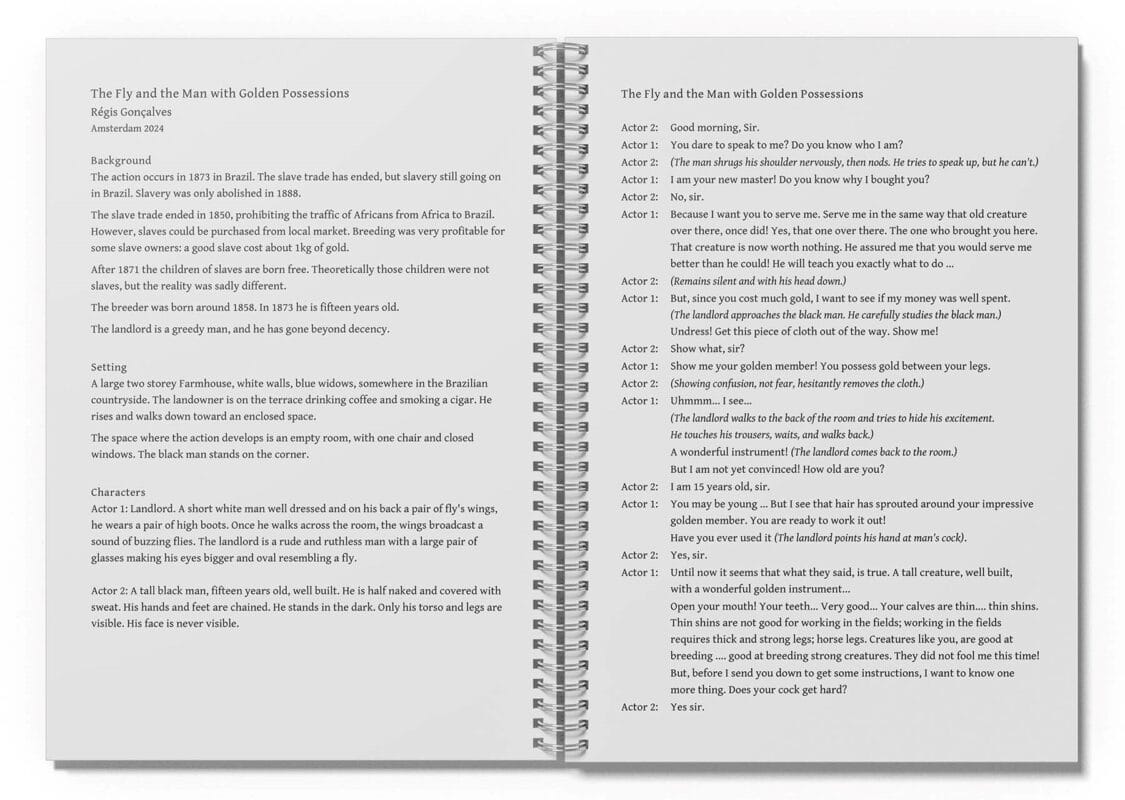
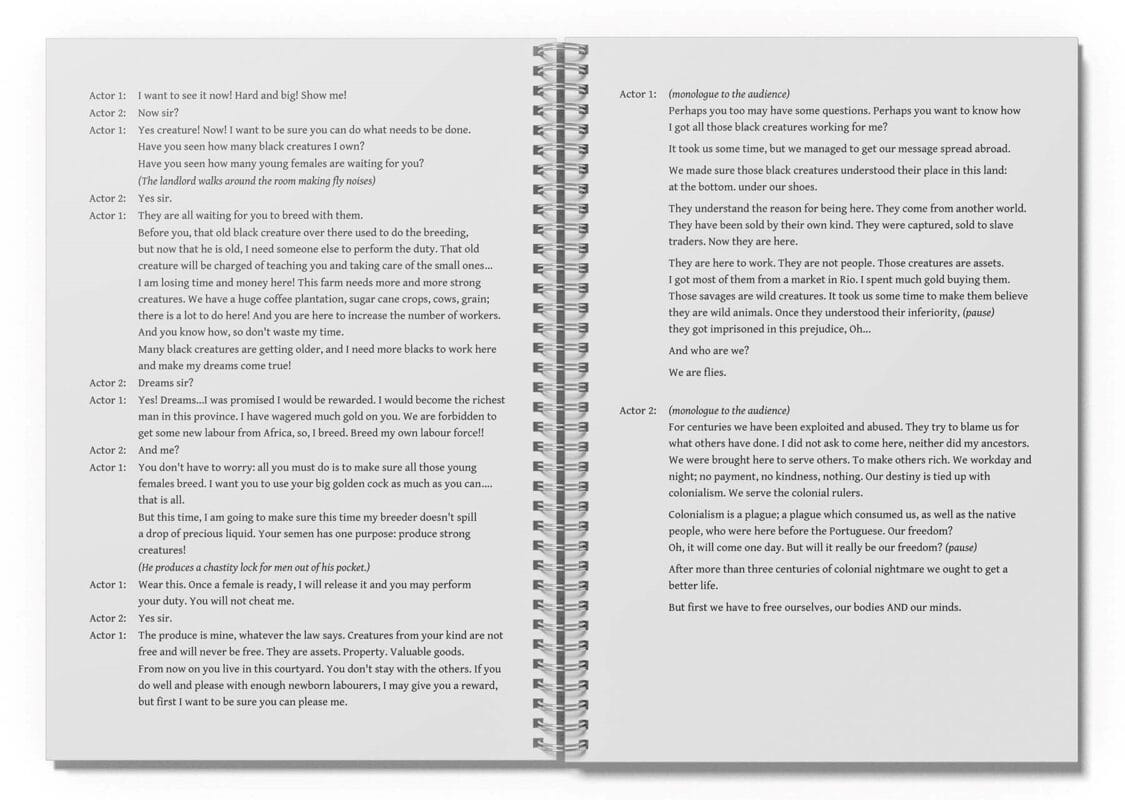
During the exhibition, part of this story gained an additional dimension through a short one-act play written by Régis Gonçalves himself. In a raw and uncompromising manner, the play reveals how colonial thinking penetrated even the most intimate sphere: the body as property, as economic investment. The dialogue is direct and unsettling, exposing the cruel logic behind the system of slavery and forced reproduction.
This exhibition not only gives voice to a forgotten history, but also connects it to contemporary questions surrounding heritage, racism and structural inequality. The Fly and the Man with Golden Possessions forms the first part of a triptych that unravels the history of Régis’ family and, more broadly, examines Brazil’s colonial past.